
Monthly Report Highlight: OCEAN Toolbox platform - Empowering sport organisations to take on climate action

Monthly Report Highlight: OCEAN Toolbox platform - Empowering sport organisations to take on climate action

In January, the OCEAN Project celebrated its second anniversary and officially entered its final phase with Climate Action Officers from 18 National Olympic Committees (NOCs) advancing on their path to reduce their carbon footprints as part of a collective effort to tackle climate change.  


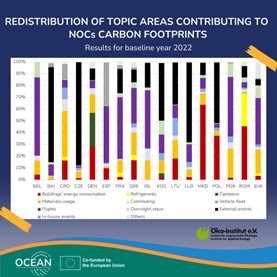
Analysis of 18 NOCs’ carbon footprint 

Throughout the project, the 18 NOCs have completed their carbon footprint measurement for 2022, marking the first step towards mitigating their environmental impact. The Comparative analysis of the NOCs’ footprints, presented by Öko-Institut, highlights primary sources of emissions. Building on these results, the NOCs are now working towards adopting a carbon footprint reduction strategies by April 2025, aligned with the UN Sports for Climate Action Framework (S4CA), supported by the International Olympic Committee.  
Guide for Climate Action Officers 

This comprehensive process has included a structured five-module training course for Climate Action Officers, covering key topics such as the fundamentals of climate change, measures to reduce the impact of transport or procurement, and communication about sustainability. Building on this training, a practical Guide for Climate Action Officers was developed to serve as a step-by-step resource for sport organisations embarking on the carbon footprint reduction process. This guide provides clear, actionable steps tailored to the unique needs of sports entities, enabling them to systematically assess their emissions, identify reduction opportunities, and implement strategies that align with global sustainability goals. 

Pool of Actions for carbon footprint reduction 

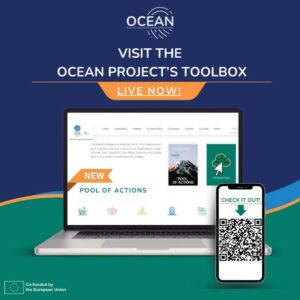
To further support sport organisations in reducing their carbon footprints, the Pool of Actions was developed together with the Öko-Institut. Comprising a collection of over 100 measures and good practices examples to reduce carbon footprint in high-impact areas, such as travel, energy consumption, or event production.  

Looking ahead  

To empower all sport organisations, the OCEAN Project is also developing Carbon Footprint Measurement Tool which will be soon freely available on the OCEAN Toolbox platform for all 206 NOCs and sport organisations. The tool designed by the Öko-Institut with the 18 NOCs and therefore fits the scope of activities of sport organisations. The tool will be available in English, Spanish, and French.  

From April 2025, the carbon Footprint Reduction strategies from the 18 NOCs will be available at the OCEAN Toolbox platform to inspire and encourage NOCs and sport organisations to take on climate action.  
Further Information 
LinkedIn Post 

Subscribe to the Newsletter 

Recent Posts

Olympic Day and the launch of the 2026 #BeActive Campaign celebrate sport across Europe

Coinciding with Olympic Day on 23 June, the launch of the 2026 #BeActive  campaign and the #BeActive  EU Sport Awards brought together organisations, individuals, and stakeholders from across Europe to celebrate their contributions to sport and society. During the ceremony for the #BeActive  EU Sport Awards, European Commissioner for Intergenerational Fairness, Youth, Culture and Sport, […]

Read More
SAFE HARBOUR project presented during the OMC group on athletes’ rights

On 16 and 17 June, the OMC group on ‘promoting athletes rights within the context of good governance in sport’ held its fourth meeting. At the occasion, the EOC EU Office presented the SAFE HARBOUR project as a leading example of how safeguarding initiatives can advance athletes’ rights across Europe. The EOC EU Office underlined […]

Read More
SHARE 2.0 online capacity-building event on leveraging EU funds for sustainable sport infrastructure

As part of the SHARE 2.0 Community of Practice on Green Sport, an online capacity-building event “Leveraging EU Funds for Sustainable Sport Infrastructure” was held on 18 June 2026. The discussion revolved around the need for sport infrastructure to remain fundable under future EU funding programmes and how to best position sport when competing with […]

Read More

Related Posts

June 26, 2026
Olympic Day and the launch of the 2026 #BeActive Campaign celebrate sport across Europe

Coinciding with Olympic Day on 23 June, the launch of the 2026 #BeActive  campaign and the #BeActive  EU Sport Awards brought together organisations, individuals, and stakeholders from across Europe to celebrate their contributions to sport and society. During the ceremony for the #BeActive  EU Sport Awards, European Commissioner for Intergenerational Fairness, Youth, Culture and Sport, […]

June 22, 2026
SAFE HARBOUR project presented during the OMC group on athletes’ rights

On 16 and 17 June, the OMC group on ‘promoting athletes rights within the context of good governance in sport’ held its fourth meeting. At the occasion, the EOC EU Office presented the SAFE HARBOUR project as a leading example of how safeguarding initiatives can advance athletes’ rights across Europe. The EOC EU Office underlined […]

June 22, 2026
SHARE 2.0 online capacity-building event on leveraging EU funds for sustainable sport infrastructure

As part of the SHARE 2.0 Community of Practice on Green Sport, an online capacity-building event “Leveraging EU Funds for Sustainable Sport Infrastructure” was held on 18 June 2026. The discussion revolved around the need for sport infrastructure to remain fundable under future EU funding programmes and how to best position sport when competing with […]

About us

The EOC EU Office is the House of European Sport, representing the European Olympic Committees (EOC), the IOC and other major sport organisations to the European institutions in Brussels.
CONTACT
crossmenu linkedin facebook pinterest youtube rss twitter instagram facebook-blank rss-blank linkedin-blank pinterest youtube twitter instagram