European Week of Sport: More Than #BeActive

European Week of Sport: More Than #BeActive

Celebrating not only participation in sport, but also the ideas and partnerships that make European sport stronger.

Every September, the European Week of Sport brings together millions of people across Europe under a common message: #BeActive.
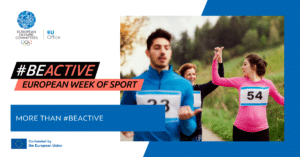
From grassroots initiatives to elite competitions, schools to workplaces, the campaign celebrates the many ways physical activity contributes to healthier and more connected communities.

Yet the European Week of Sport is also an opportunity to reflect on another important dimension of European cooperation: how knowledge, innovation and collaboration help strengthen the sport sector itself.

Beyond participation

Encouraging people to become more physically active remains at the heart of the European Week of Sport.

Behind every successful initiative, however, are organisations working continuously to improve how sport is governed, delivered and experienced.

National Olympic Committees, international and national federations, clubs, volunteers, coaches and public authorities all play a role in creating safe, inclusive and sustainable environments where sport can flourish.

Supporting these organisations means investing in the long-term quality and resilience of European sport.

European cooperation in action

Over the past decade, Erasmus+ Sport has enabled hundreds of organisations to work together across borders, developing practical solutions to shared challenges.

These collaborations have addressed issues such as:

  • strengthening good governance;
  • promoting gender equality;
  • advancing environmental sustainability;
  • safeguarding athletes and participants;
  • supporting volunteers;
  • fostering social inclusion.

Each project contributes new knowledge, practical tools and tested methodologies that can benefit organisations well beyond the original partnership.

A shared responsibility

No single organisation has all the answers.

The strength of European cooperation lies precisely in recognising that many challenges are shared.

Whether improving governance structures, reducing environmental impact or creating more inclusive opportunities, organisations across Europe often face similar questions.

Learning from one another accelerates progress and avoids unnecessary duplication of effort.

Looking beyond this week

While the European Week of Sport lasts only a few days, the knowledge generated through European cooperation continues to create value throughout the year.

By sharing successful practices and making existing resources more accessible, the European sport community can continue building stronger organisations long after the campaign has ended.

Because being active also means being willing to learn, adapt and improve.

Recent Posts

OMC group publishes final report on the fight against hate speech in sport

The final report of the Open Method of Coordination (OMC) Group on the fight against hate speech in sport has now been published. The group was set up under the EU Work Plan for Sport 2024-2027, bringing together Member State representatives, experts and the EOC EU Office as one of several permanent observers. The report […]

Read More
Good Governance doesn't start from scratch

European sport organisations already have access to practical tools, knowledge and experience to strengthen their governance; however, the key is turning these resources into action through ad-hoc tailored activities, capacity-building and peer-to-peer exchanges. While good governance is a longstanding commitment of the European Olympic Movement and a key priority for the EOC EU Office, as […]

Read More
Erasmus+ 2028-2034: CULT Committee backs dedicated sport budget

On 29 September, the European Parliament's Committee on Culture and Education (CULT) adopted its position on Erasmus+ 2028-2034 with a vast majority. The Committee calls for an overall budget of €47.39 billion, an increase compared to the €40.8 billion proposed by the European Commission, and for sport to receive a dedicated share of 4.1%, alongside […]

Read More

Related Posts

October 9, 2026
OMC group publishes final report on the fight against hate speech in sport

The final report of the Open Method of Coordination (OMC) Group on the fight against hate speech in sport has now been published. The group was set up under the EU Work Plan for Sport 2024-2027, bringing together Member State representatives, experts and the EOC EU Office as one of several permanent observers. The report […]

October 7, 2026
Good Governance doesn't start from scratch

European sport organisations already have access to practical tools, knowledge and experience to strengthen their governance; however, the key is turning these resources into action through ad-hoc tailored activities, capacity-building and peer-to-peer exchanges. While good governance is a longstanding commitment of the European Olympic Movement and a key priority for the EOC EU Office, as […]

October 5, 2026
Erasmus+ 2028-2034: CULT Committee backs dedicated sport budget

On 29 September, the European Parliament's Committee on Culture and Education (CULT) adopted its position on Erasmus+ 2028-2034 with a vast majority. The Committee calls for an overall budget of €47.39 billion, an increase compared to the €40.8 billion proposed by the European Commission, and for sport to receive a dedicated share of 4.1%, alongside […]

About us

The EOC EU Office is the House of European Sport, representing the European Olympic Committees (EOC), the IOC and other major sport organisations to the European institutions in Brussels.
CONTACT
crossmenu linkedin facebook pinterest youtube rss twitter instagram facebook-blank rss-blank linkedin-blank pinterest youtube twitter instagram