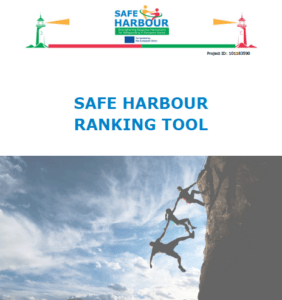
In June 2026, the SAFE HARBOUR consortium submitted its latest deliverable, the SAFE HARBOUR Ranking Tool. The tool provides sport organisations with a structured, consistent and comparable framework to identify, document and address safeguarding concerns more effectively.
It establishes shared definitions for different forms of interpersonal violence, including physical, sexual and psychological violence, as well as neglect, negligence and endangerment. It also includes a coding system to classify cases according to the type of concern and whether the person affected is an adult or a minor, a reporting template to support the collection of relevant information, and practical examples illustrating different situations and levels of seriousness. Therefore, by offering a shared understanding of what safeguarding risks entail, the Ranking Tool supports consistency in how such concerns are recognised and handled across different sport organisation across Europe.
The framework also builds on the IOC Consensus Statements on interpersonal violence and on harassment and abuse in sport, alongside a wider body of academic and international literature addressing violence and safeguarding. Yet it is the result of ten Peer-to-Peer roundtables held between March 2025 and April 2026, in which partner National Olympic Committees (NOCs) and International Federations (IFs) discussed the forms and mechanisms of harassment and abuse. As a tool developed by and for sport organisations, this collaborative process was designed to ensure its practical relevance and applicability.
This deliverable directly contributes to the objectives of the SAFE HARBOUR project, offering sport organisations a practical tool to identify and respond to safeguarding concerns.
You can find the SAFE HARBOUR Ranking Tool here: SAFE HARBOUR Ranking Tool .
Background information on the SAFE HARBOUR project.
SAFE HARBOUR, standing for “Strengthening Response Mechanisms for Safeguarding in European Sport”, is a 30-month project co-funded by the European Union through the Erasmus+ Sport Programme 2024. Coordinated by the EOC EU Office, the consortium brings together Thomas More and the Asser Institute as experts in safeguarding, human rights and law, alongside 2 International Federations (the International Biathlon Union and the International Ice Hockey Federation) and 20 National Olympic Committees (Belgium, Bosnia and Herzegovina, Croatia, Cyprus, Czechia, Denmark, Germany, Hungary, Kosovo, Latvia, Lithuania, Luxembourg, Malta, Montenegro, Norway, Poland, Portugal, Romania, Slovakia and Slovenia). The International Olympic Committee (IOC) is also involved as an external resource.
The project aims to strengthen the capacity of European NOCs and Federations to address safeguarding concerns by identifying gaps, developing a European Response framework and fostering collaboration. This framework will be adapted to national contexts and complemented by training and awareness initiatives to enhance safeguarding at both national and European levels. Ultimately, SAFE HARBOUR seeks to equip partner organisations with the tools and confidence to implement effective safeguarding measures and establish a robust support network for Safeguarding Officers.