 Photo credits: DSJ
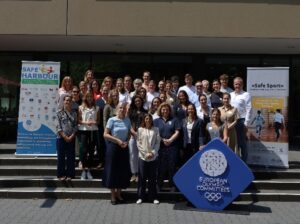
FOR SAFEGUARDING IN SPORT. The SAFE HARBOUR consortium met in Frankfurt, Germany, on 29–30 June 2026 for its third partners meeting, marking an important step towards strengthening safeguarding responses across European sport.
Hosted by the German Olympic Sports Confederation (DOSB), the meeting welcomed both consortium members and observer representatives from several National Olympic Committees (NOCs). Coordinated by the EOC EU Office, these two days provided an opportunity to take stock of the project's progress, mark the completion of the activities related to the “state of play” while laying the foundation for the next activities and deliverables.
Completing Work Package 2 and preparing the next phase
A key milestone of the meeting was the completion of Work Package 2, which has provided the consortium with a comprehensive understanding of the current situation concerning safeguarding response mechanisms across European sport. Building on these achievements, discussions focused on the development of the European Response Framework under Work Package 3.
Drawing on the thematic seminars organised since December 2025, partners worked together to translate the insights gathered through these exchanges into a coherent and practical framework that can support organisations in responding to safeguarding concerns. Alongside the framework, the consortium also advanced discussions on the accompanying Position Paper, which will communicate the project's key recommendations to external stakeholders. Throughout the exchanges, partners sought to strike the right balance between establishing a common European approach while preserving the flexibility needed to reflect different national and organisational contexts.
The meeting also provided an opportunity to further shape the future European Network for Safe Sport (ENSS), which will be officially launched during the project's final conference in June 2027. The proposed network will strengthen cooperation and mutual support among Safeguarding Officers thereby fostering peer learning, knowledge exchange and long-term collaboration beyond the lifetime of the project.
Laying the groundwork for implementation
The second day was dedicated to a workshop on the development of National Strategies, a major project output expected by the end of 2026 and developed in parallel with the European Response Framework. Guided by Thomas More and the Asser Institute, partners applied the VMOST methodology, progressing from defining a shared safeguarding vision to identifying missions, objectives and practical tactics that can support implementation within NOCs and International Federations.
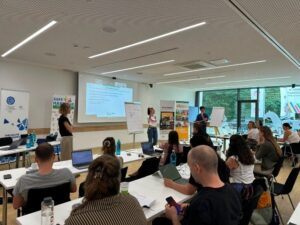
Aligned with the workshop, the afternoon focused on supporting the transition from European-level recommendations to national implementation; accordingly, the meeting highlighted the strong progress achieved since the project’s launch and the collaborative spirit driving its next phase, with several key deliverables now taking shape. In the months ahead, partners will further develop the European Response Framework, support the design of National Strategies, and advance the organisation of multiplier events, ahead of the fourth SAFE HARBOUR Partners Meeting and Training of the Trainers session in Zagreb in November 2026.
Background information on the SAFE HARBOUR project.
SAFE HARBOUR, standing for “Strengthening Response Mechanisms for Safeguarding in European Sport”, is a 30-month project co-funded by the European Union through the Erasmus+ Sport Programme 2024. Coordinated by the EOC EU Office, the consortium brings together Thomas More and the Asser Institute as experts in safeguarding, human rights and law, alongside 2 International Federations (the International Biathlon Union and the International Ice Hockey Federation) and 20 National Olympic Committees (Belgium, Bosnia and Herzegovina, Croatia, Cyprus, Czechia, Denmark, Germany, Hungary, Kosovo, Latvia, Lithuania, Luxembourg, Malta, Montenegro, Norway, Poland, Portugal, Romania, Slovakia and Slovenia). The International Olympic Committee (IOC) is also involved as an external resource.
The project aims to strengthen the capacity of European NOCs and Federations to address safeguarding concerns by identifying gaps, developing a European Response framework and fostering collaboration. This framework will be adapted to national contexts and complemented by training and awareness initiatives to enhance safeguarding at both national and European levels. Ultimately, SAFE HARBOUR seeks to equip partner organisations with the tools and confidence to implement effective safeguarding measures, establish a robust support network for Safeguarding Officers, and lay the groundwork for a future IOC Regional Safeguarding Hub.